

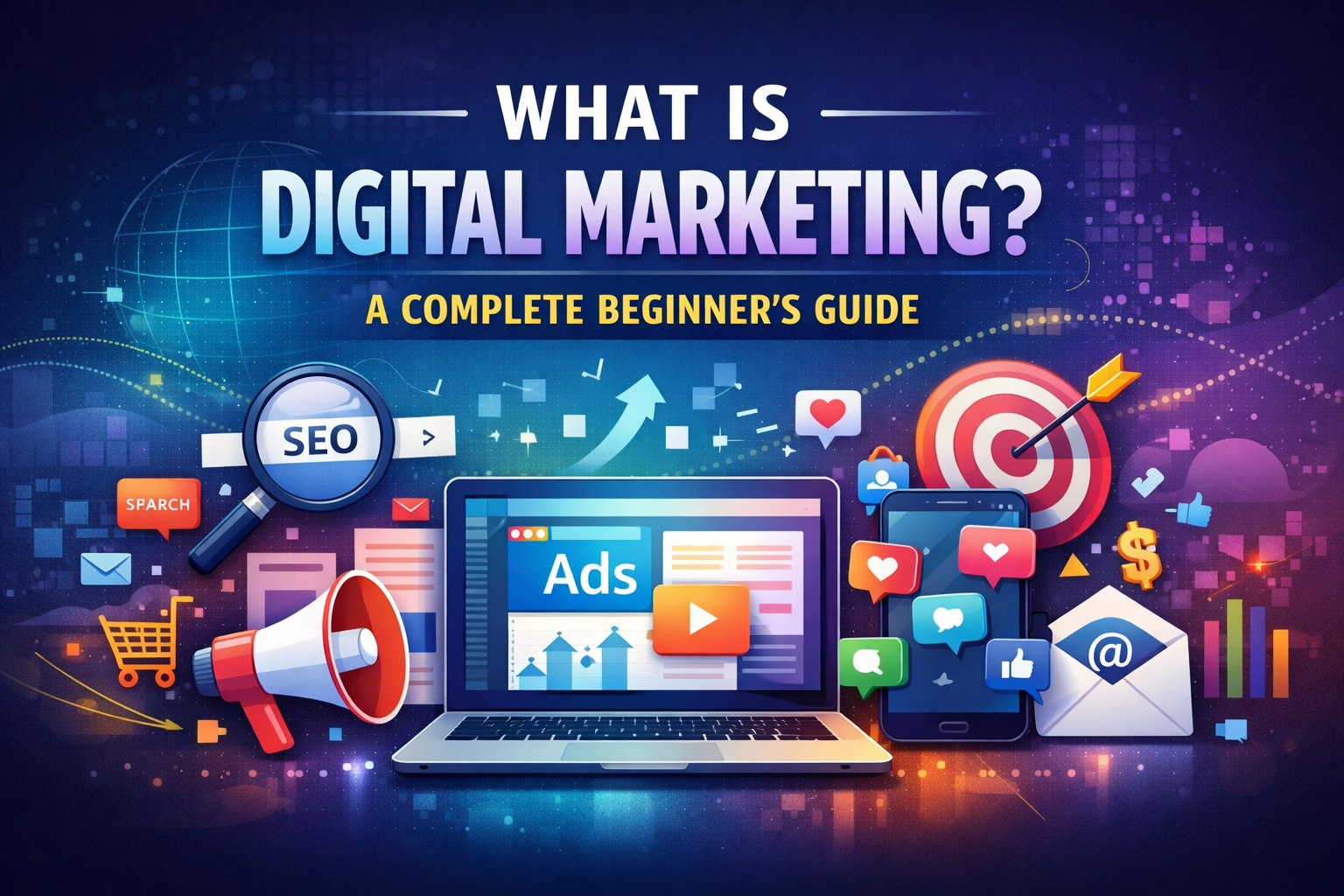
If you have ever searched for something on Google, watched a YouTube video, scrolled through Instagram, opened an email newsletter, or clicked on an online advert, then you have already interacted with digital marketing. The truth is, digital marketing is no longer a “special skill” reserved for tech experts or big companies. It has become a core part of how modern businesses survive, grow, and compete in today’s digital world.
This guide is written for absolute beginners. You do not need any prior knowledge of marketing, technology, or business to understand it. By the time you finish reading, you will clearly understand what digital marketing is, why it matters, how it works, and how the different parts fit together.
Understanding Digital Marketing in Simple Terms
Digital marketing simply means promoting products, services, or brands using digital technologies, mainly the internet. Instead of advertising on billboards, newspapers, radio, or television alone, digital marketing focuses on reaching people through websites, search engines, social media platforms, emails, mobile apps, and other online channels.
What makes digital marketing powerful is not just that it is online, but that it allows businesses to reach the right people, at the right time, with the right message, and measure the results accurately. Unlike traditional marketing, where you may never know how many people actually responded to an advert, digital marketing provides clear data and insights.
For example, if you own an online store and run a digital marketing campaign, you can see how many people visited your website, what pages they viewed, how long they stayed, and whether they made a purchase. This level of visibility changes everything.
Why Digital Marketing Is So Important Today
The world has gone digital. People now spend a significant part of their day online, whether for learning, entertainment, shopping, communication, or work. Businesses that fail to show up online are often invisible to a large portion of their potential customers.
Digital marketing allows businesses to meet people where they already are. Instead of interrupting people with adverts they did not ask for, digital marketing focuses on being visible when people are actively searching for information, solutions, or products.
It is also cost-effective. A small business with a limited budget can compete with larger companies by using smart digital strategies. With the right approach, even a single-person business can attract a global audience.
Another major advantage is trust-building. Through consistent content, helpful information, and engagement, businesses can position themselves as authorities in their field. Over time, people begin to trust the brand, and trust is what drives long-term growth.
The Core Components of Digital Marketing
Digital marketing is not one single activity. It is made up of several interconnected parts that work together. Understanding these parts will help you see the bigger picture.
Search Engine Optimization (SEO)
SEO is the process of optimizing your website and content so that search engines like Google can easily understand and rank it. When someone searches for a topic related to your business, SEO helps your website appear among the top results.
SEO focuses on things like using the right keywords, creating high-quality content, improving website speed, ensuring mobile friendliness, and earning links from other reputable websites. It is one of the most powerful long-term digital marketing strategies because it brings consistent, organic traffic without paying for every click.
For a website like lumtice.com, SEO plays a critical role in attracting people searching for information on digital marketing, AI, web development, and ICT-related topics.
Content Marketing
Content marketing is about creating and sharing valuable, relevant, and educational content to attract and retain an audience. This includes blog posts, articles, guides, videos, podcasts, case studies, and tutorials.
Instead of directly selling, content marketing focuses on teaching, informing, and helping. Over time, this builds trust and positions your brand as an expert. When people are ready to buy or need professional services, they naturally turn to the brand that has been helping them.
This very article you are reading is an example of content marketing in action.
Social Media Marketing
Social media marketing involves using platforms like Facebook, Instagram, LinkedIn, X (Twitter), TikTok, and others to connect with your audience. It is not just about posting content, but about building relationships, engaging in conversations, and creating a community around your brand.
Social media allows businesses to humanize their brand. People do not want to interact with faceless companies; they want to engage with real people, stories, and values.
When done properly, social media marketing supports other digital marketing efforts by driving traffic to websites, increasing brand awareness, and strengthening trust.
Email Marketing
Email marketing remains one of the most effective digital marketing strategies when used correctly. It involves sending targeted messages to people who have shown interest in your brand by subscribing to your email list.
Unlike social media, where algorithms control visibility, email marketing gives you direct access to your audience. It is ideal for nurturing relationships, sharing updates, promoting content, and guiding people through a customer journey.
A well-planned email strategy can turn casual visitors into loyal customers over time.
Paid Advertising (PPC and Display Ads)
Paid advertising involves paying platforms like Google, Facebook, or LinkedIn to show your adverts to specific audiences. This is often referred to as Pay-Per-Click (PPC) advertising because you pay when someone clicks on your ad.
Paid ads are powerful because they produce faster results compared to organic strategies like SEO. They are especially useful for promotions, product launches, or testing new ideas.
However, paid advertising works best when combined with strong content and a well-optimized website. Sending paid traffic to a poorly designed or unclear page often leads to wasted money.
Analytics and Data Tracking
One of the biggest strengths of digital marketing is data. Tools like Google Analytics, Search Console, and social media insights help marketers understand what is working and what is not.
Analytics allows you to track visitor behavior, measure conversions, identify popular content, and improve performance over time. Without data, digital marketing becomes guesswork. With data, it becomes a system that can be refined and scaled.
How Digital Marketing Works Together as a System
It is important to understand that digital marketing works best when all its parts support each other. SEO brings people searching for information. Content marketing educates and builds trust. Social media amplifies reach and engagement. Email marketing nurtures relationships. Paid ads accelerate growth. Analytics ties everything together and guides decisions.
When these elements are aligned, the result is a strong digital presence that attracts traffic, builds authority, and drives sustainable growth.
Who Should Learn Digital Marketing?
Digital marketing is not limited to marketers alone. Business owners, entrepreneurs, freelancers, developers, content creators, and even job seekers can benefit from understanding digital marketing fundamentals.
If you own a business, digital marketing helps you attract customers and grow revenue. If you are a professional, it increases your value and career opportunities. If you are a beginner exploring tech, it provides a solid foundation for understanding how the digital world operates.
Final Thoughts
Digital marketing is no longer optional. It is a core skill and strategy for anyone who wants to succeed in today’s connected world. The good news is that it is learnable. With the right guidance, consistent practice, and a clear understanding of the fundamentals, anyone can master it.
This guide is just the beginning. As you continue learning, you will discover more advanced strategies, tools, and techniques that build on these basics. At lumtice.com, we will continue breaking down digital marketing, AI, web development, and ICT topics in a way that is practical, beginner-friendly, and growth-focused.
If you understand this foundation, you are already ahead of many people.