

If you have ever wondered why some websites seem to effortlessly turn visitors into paying customers while others struggle despite getting traffic, the answer is often found in one concept: the sales funnel. For beginners, the idea of a sales funnel can sound technical or complicated, but in reality, it is simply a structured way of guiding people from first contact with your brand to taking a meaningful action, usually a purchase.
This guide will explain what a sales funnel is, how it works, and how you can use it to turn casual visitors into loyal customers, even if you are just starting out.
What a Sales Funnel Really Is
A sales funnel is a step-by-step journey that a potential customer goes through before making a buying decision. It is called a “funnel” because many people enter at the top, but only a smaller number reach the bottom and become customers.
Unlike random marketing efforts where you hope visitors will figure things out on their own, a sales funnel provides direction. It anticipates what a visitor needs at each stage and delivers the right message at the right time.
At its core, a sales funnel is about understanding human behavior. People rarely buy immediately. They need information, trust, reassurance, and sometimes multiple interactions before they are ready to commit.
Why a Website Without a Funnel Struggles
Many beginners believe that once they build a website and get traffic, sales will automatically happen. In reality, traffic alone does not guarantee results. Visitors arrive with different levels of awareness and interest. Without guidance, most of them leave without taking action.
A sales funnel solves this problem by giving visitors a clear path. Instead of landing on your site and feeling confused, they are gently guided through content, offers, and interactions that move them closer to a decision.
This is why businesses that use funnels often outperform those that rely on a single page or random calls to action.
The Main Stages of a Sales Funnel Explained Simply
Although funnels can be designed in many ways, they generally follow a clear structure. Each stage serves a specific purpose.
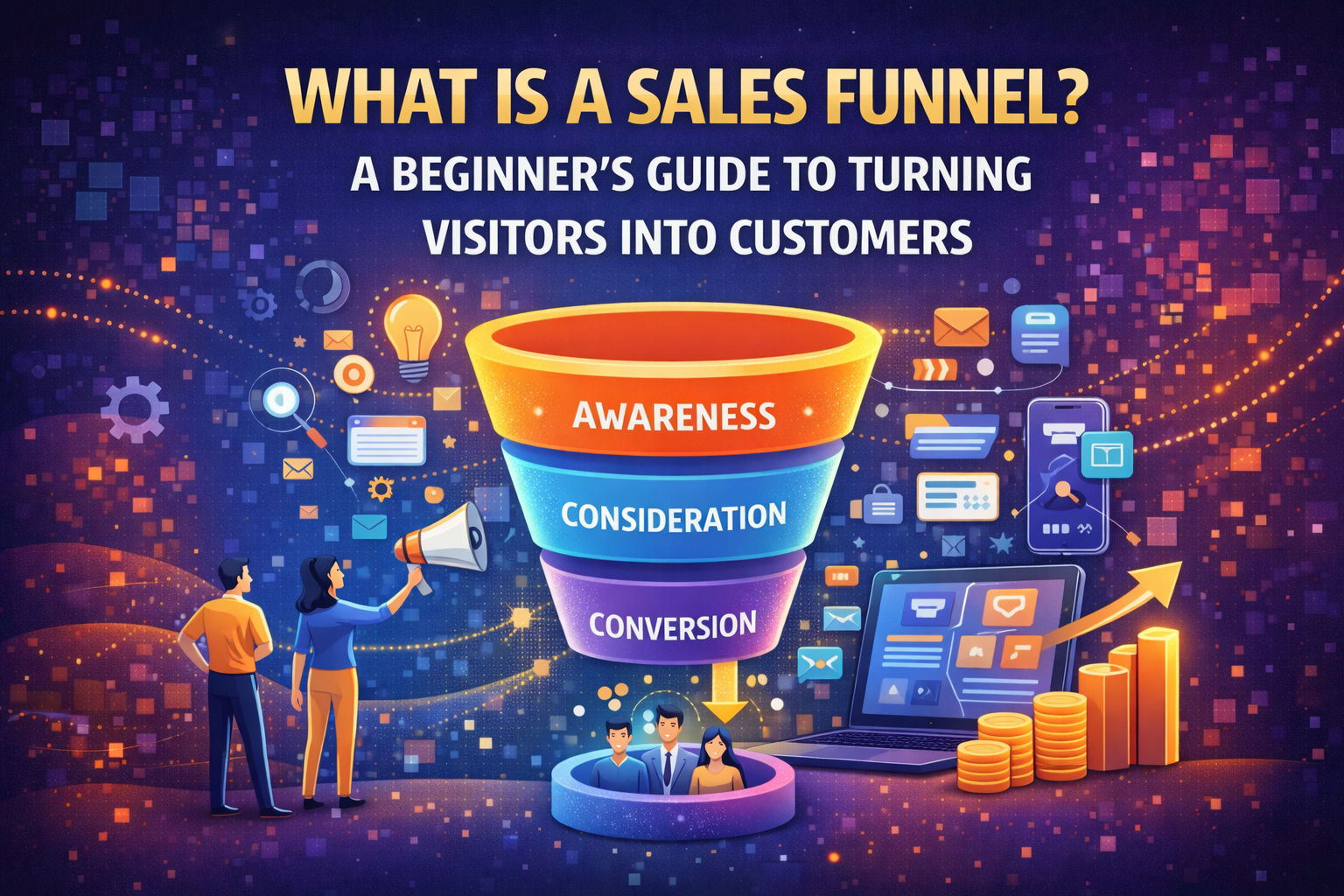
At the top of the funnel is awareness. This is where people first discover your brand. They may find you through a blog post, social media, search engine, or advertisement. At this stage, they are not looking to buy yet. They are looking for information, solutions, or clarity.
The middle of the funnel is consideration. Here, visitors are aware of their problem and are evaluating options. They want to understand how your solution works and why it might be better than others. This is where trust is built through education, value-driven content, and proof.
The bottom of the funnel is conversion. At this stage, the visitor is ready to take action. This could be making a purchase, booking a call, signing up for a service, or joining a program. The message here must be clear, reassuring, and focused on removing final doubts.
How a Sales Funnel Turns Visitors into Customers
The power of a sales funnel lies in its ability to meet people where they are. Instead of pushing a sale immediately, it focuses on building a relationship.
For example, a visitor might first read a helpful blog post. From there, they may be invited to download a free guide or join an email list. Over time, they receive useful emails that educate and build trust. Eventually, when they are ready, they are presented with a relevant offer.
This process feels natural rather than forced. The visitor feels guided, not pressured.
Common Types of Sales Funnels Beginners Can Use
One of the simplest funnels for beginners is a lead generation funnel. This funnel focuses on capturing contact information, usually an email address, in exchange for something valuable such as a free guide, checklist, or resource.
Another common type is a product sales funnel. This starts with awareness content, followed by education, and ends with a direct offer for a product or service.
There are also service-based funnels, where the goal is to book a consultation or strategy call. These funnels focus heavily on trust, authority, and clear communication of value.
Each type of funnel serves a different goal, but the underlying principles remain the same.
Key Elements That Make a Sales Funnel Work
A successful sales funnel relies on clarity. Visitors should always know what to do next. Confusing navigation or too many options reduce conversions.
Value is equally important. Each step of the funnel should offer something useful, whether it is information, insight, or a solution to a problem.
Consistency also matters. The message, tone, and promise should align across all funnel stages. When there is a disconnect, trust is lost.
Finally, follow-up plays a major role. Many conversions happen after multiple interactions. Email sequences, retargeting, and reminders ensure that interested visitors do not fall through the cracks.
Sales Funnels and Digital Growth
In digital marketing, sales funnels are not optional. They are the backbone of scalable growth. Whether you are running ads, publishing blog content, or building a brand on social media, a funnel ensures that your efforts lead somewhere meaningful.
For platforms like lumtice.com, funnels help transform educational content into long-term business results by connecting traffic to clear outcomes.
Getting Started with Your First Sales Funnel
Beginners often think they need complex tools or expensive software to build a funnel. In reality, a basic funnel can be created using simple components: a piece of valuable content, a clear call to action, and a follow-up system.
The most important step is understanding your audience and their journey. Once you understand what they need at each stage, building a funnel becomes much easier.
Start simple, test what works, and improve over time.
Final Thoughts
A sales funnel is not about manipulation or tricking people into buying. It is about clarity, guidance, and value. It helps the right people find the right solution at the right time.
For beginners, mastering the concept of sales funnels is a turning point. It shifts your mindset from hoping for sales to building systems that consistently turn visitors into customers.
When you understand funnels, traffic stops being a vanity metric and starts becoming a real business asset.