

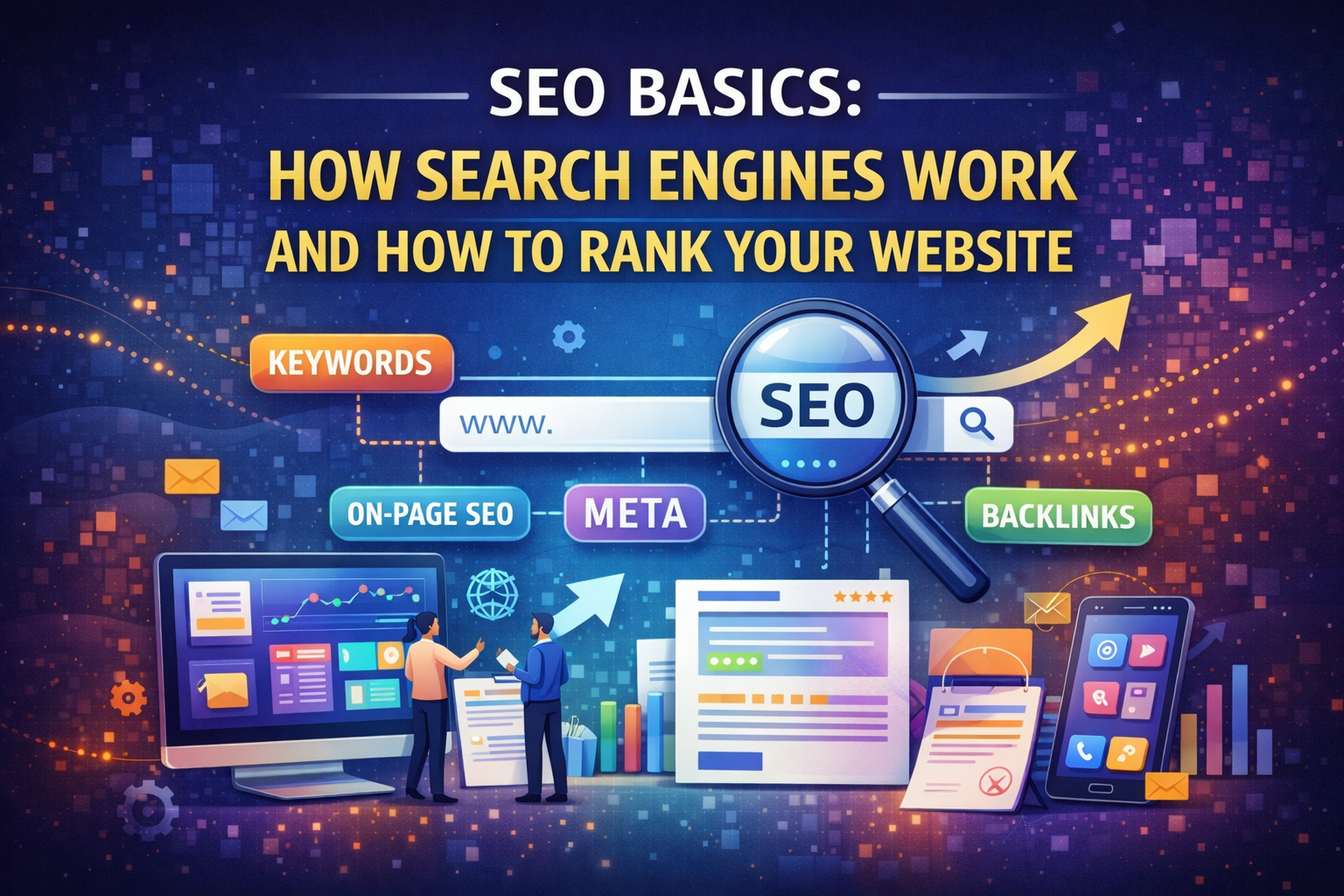
If you own a website, run a blog, or plan to build any serious online presence, then Search Engine Optimization, commonly known as SEO, is something you cannot ignore. SEO is the reason some websites consistently appear on the first page of Google while others remain invisible, even when they offer good products or valuable information.
For beginners, SEO can feel confusing and overly technical. Terms like keywords, backlinks, and meta descriptions are often mentioned without proper explanation. This guide is written to remove that confusion. You will understand how search engines work, what SEO really means, and the practical steps you can take to start ranking your website the right way.
What Is SEO and Why It Matters
SEO is the process of optimizing your website so that search engines can easily find, understand, and rank your content when people search for related topics. The goal is simple: to attract free, organic traffic from search engines like Google.
When someone searches for information, Google scans billions of web pages to find the most relevant and helpful results. SEO helps your website become one of those results. Unlike paid advertising, SEO focuses on long-term visibility and sustainable traffic growth.
For a website like lumtice.com, SEO is especially important because people actively search for topics related to digital marketing, AI, web development, and ICT. Ranking well means attracting visitors who are already interested in what you offer.
How Search Engines Actually Work
To understand SEO, you first need to understand how search engines work at a basic level. Search engines perform three main functions: crawling, indexing, and ranking.
Crawling is when search engines use automated programs called bots or spiders to discover new and updated web pages. These bots move from link to link across the internet, collecting information from websites.
Indexing is the process of storing and organizing the collected information. Once a page is indexed, it becomes eligible to appear in search results. If a page is not indexed, it will not rank, no matter how good the content is.
Ranking is where SEO comes into play most strongly. When a user performs a search, the search engine evaluates all relevant indexed pages and ranks them based on hundreds of factors. These factors include relevance, content quality, user experience, and authority.
Understanding Keywords and Search Intent
Keywords are the words or phrases people type into search engines when looking for information. SEO starts with understanding how people search and what they are searching for.
There are different types of keywords. Short keywords are broad and highly competitive, while long-tail keywords are more specific and usually easier to rank for. For example, “SEO” is a broad keyword, while “SEO basics for beginners” is more specific.
Search intent is just as important as the keyword itself. When someone searches for a term, they may be looking for information, a product, a service, or a solution to a problem. Understanding intent helps you create content that truly matches what the user wants.
A beginner-friendly SEO strategy focuses on creating helpful content around keywords that match user intent, rather than trying to manipulate search engines.
On-Page SEO: Optimizing Your Content and Pages
On-page SEO refers to everything you can control directly on your website to improve rankings. It starts with high-quality content that answers user questions clearly and thoroughly.
Your main keyword should appear naturally in important places such as the page title, headings, and throughout the content. However, it must feel natural and readable. Overusing keywords, known as keyword stuffing, can harm your rankings rather than help them.
Page structure also matters. Clear headings make your content easier for both users and search engines to understand. A well-organized page improves readability and user experience, which are important ranking signals.
Images should be properly optimized with descriptive file names and alt text. This helps search engines understand what the images represent and improves accessibility.
Meta Descriptions and Why They Matter
A meta description is a short summary of your page that appears under the title in search results. While meta descriptions do not directly affect rankings, they influence click-through rates.
A well-written meta description encourages users to click your link instead of others. It should clearly explain what the page is about and include your main keyword in a natural way.
For beginners, think of the meta description as a short advertisement for your content. If people click your result more often, it sends positive signals to search engines about relevance and usefulness.
Understanding Backlinks and Website Authority
Backlinks are links from other websites pointing to your website. Search engines view backlinks as votes of confidence. When reputable websites link to your content, it signals that your site is trustworthy and valuable.
Not all backlinks are equal. A single link from a high-quality, relevant website is more valuable than many links from low-quality sources. Quality matters far more than quantity.
For beginners, the best way to earn backlinks is by creating valuable content that people naturally want to reference. Guest blogging, partnerships, and sharing helpful resources also help build backlinks organically.
Technical SEO in Simple Terms
Technical SEO focuses on how well your website functions behind the scenes. This includes site speed, mobile responsiveness, secure connections, and clean URLs.
A slow website frustrates users and search engines alike. Ensuring your site loads quickly and works well on mobile devices is essential. Search engines prioritize user experience, and technical issues can hold back even the best content.
Making sure your site is secure with HTTPS and properly structured helps search engines crawl and index your pages more efficiently.
Practical SEO Tips for Beginners
If you are just starting out, focus on getting the basics right instead of chasing advanced tricks. Start by creating helpful, original content that answers real questions. Think about what your audience wants to learn and explain it clearly.
Use keywords naturally and focus on readability. Write for humans first, then optimize for search engines. Install tools like Google Search Console to monitor how your site appears in search results.
Build internal links between related pages on your website. This helps users discover more content and helps search engines understand your site structure.
Be patient. SEO is not instant. It takes time for search engines to trust your site and rank your content. Consistency and quality always win in the long run.
Final Thoughts
SEO is not about tricking search engines. It is about understanding how they work and aligning your website with what users find helpful. When you focus on clarity, value, and user experience, SEO becomes a natural extension of good content creation.
For websites like lumtice.com, SEO is a powerful long-term strategy for building authority, attracting the right audience, and growing sustainably. As you continue learning SEO, you will discover that it connects closely with content marketing, web development, and digital strategy as a whole.
Mastering the basics puts you on the right path.